


Loose steering is one of those car problems that feels uncomfortable right away. The vehicle may still move, turn, and stop, but something feels off. The steering wheel may have too much play. The car may wander in the lane. You may need to keep making small corrections just to stay straight.
That is not something to ignore.
Loose steering can come from several parts in the steering and suspension system. Some issues are minor at first. Others can become dangerous if they get worse. Since the steering system helps control the vehicle’s direction, any looseness should be checked as soon as possible.
What Does Loose Steering Feel Like?
Loose steering can show up in different ways. The steering wheel may move slightly before the wheels respond. The car may drift left or right. It may feel unstable over bumps. You may hear clunking, knocking, or popping when turning.
Some drivers describe it as a “floating” feeling. Others say the vehicle does not feel connected to the road. In many cases, the problem gets worse at higher speeds because small steering issues become more noticeable.
Loose steering does not always mean one specific part has failed. It usually means something in the steering, suspension, or alignment system is worn, loose, or damaged.
Worn Tie Rod Ends
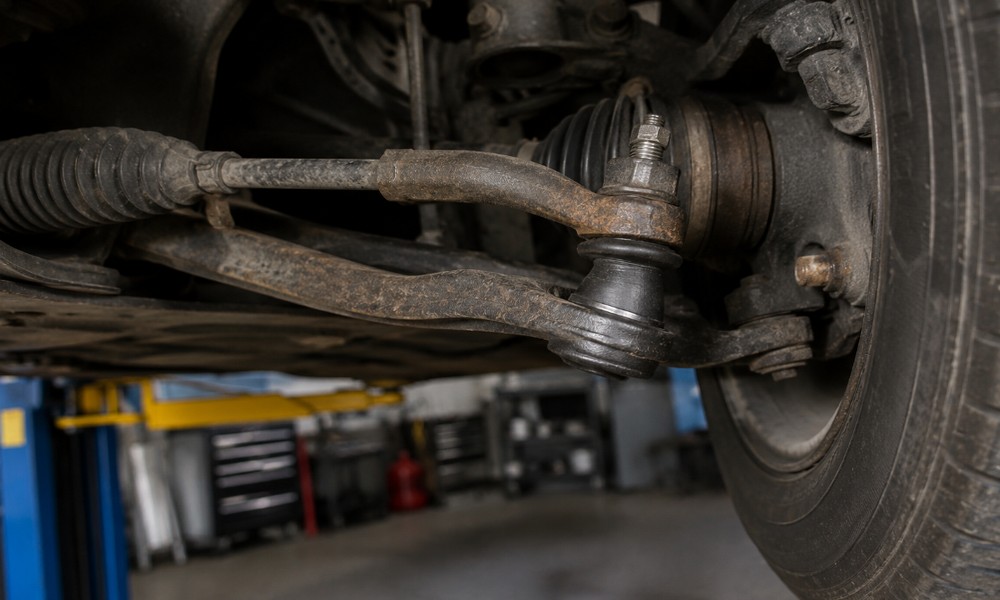
Tie rod ends are one of the most common causes of loose steering. They connect the steering system to the wheels and help transfer movement from the steering wheel to the tires.
When tie rod ends wear out, the wheels may not respond as tightly as they should. This can create steering play, uneven tire wear, clunking noises, or a shaky feeling while driving.
A badly worn tie rod end can be serious. If it fails completely, steering control can be lost. That is why this part should be inspected quickly when steering feels loose.
Failing Ball Joints
Ball joints allow the suspension and wheels to move while still staying connected. They act like pivot points between the control arms and steering knuckles.
When ball joints wear out, the front end may feel loose or unstable. You may hear clunking over bumps or notice uneven tire wear. The steering may also feel vague, especially when turning or driving over rough roads.
Like tie rods, ball joints are safety-critical parts. If a ball joint separates, the wheel can shift out of position. That can cause severe loss of control.
Worn Control Arm Bushings
Control arms help hold the wheels in the correct position. Bushings are rubber or rubber-like parts that cushion movement where the control arms attach to the vehicle frame.
Over time, bushings can crack, shrink, or wear out. When that happens, the control arm may move more than it should. This can make the steering feel loose or delayed.
Bad control arm bushings may also cause knocking sounds, poor alignment, tire wear, or a pulling feeling when braking. The vehicle may feel less stable during turns or over bumps.
Loose or Damaged Steering Rack
The steering rack is a major part of the steering system. It helps convert steering wheel movement into side-to-side movement at the wheels.
If the steering rack is worn, leaking, or loose, the steering may feel sloppy. You may also notice clicking, clunking, fluid leaks, or uneven steering effort. In some vehicles, the steering wheel may not return to center smoothly after a turn.
A steering rack problem usually needs proper diagnosis. It can feel similar to tie rod or suspension wear, so guessing is not a good idea.
Worn Wheel Bearings
Wheel bearings allow the wheels to spin smoothly. When they wear out, they can cause humming, grinding, vibration, or looseness in the wheel assembly.
A bad wheel bearing does not always feel like a steering problem at first, but it can affect stability. If the wheel has too much play, the vehicle may feel loose or shaky. The noise may get louder with speed or change when turning.
Wheel bearing problems should not be ignored because they can get worse over time and affect wheel safety.
Weak Shocks or Struts
Shocks and struts control how the vehicle handles bumps, dips, and weight movement. If they are worn, the vehicle may bounce too much or feel unstable.
Weak struts can make steering feel less precise because the tires may not stay firmly planted on the road. The front end may dip during braking, lean during turns, or bounce after hitting bumps.
This can make the vehicle feel loose even if the steering parts are still working. Poor ride control can also increase tire wear and reduce braking performance.
Bad Alignment or Tire Problems
Sometimes loose steering is not caused by a broken suspension part. Tire and alignment problems can also make the vehicle feel unstable.
Incorrect tire pressure, uneven tire wear, damaged tires, or poor alignment can cause wandering, pulling, vibration, or vague steering. If the issue started after hitting a pothole, curb, or road debris, alignment should be checked.
Still, alignment problems often happen because a suspension part is worn. So both the tires and front-end components should be inspected.
Why You Should Not Ignore Loose Steering
Loose steering affects safety. It can reduce control, increase stopping distance, and make emergency maneuvers harder. A small amount of play may seem manageable, but worn parts usually get worse.
The best step is to have the front end inspected. A proper check should include tie rods, ball joints, control arms, bushings, wheel bearings, shocks, struts, steering rack, tires, and alignment.
Final Thoughts
If your steering feels loose, the problem could come from worn tie rod ends, failing ball joints, bad control arm bushings, a loose steering rack, worn wheel bearings, weak struts, or tire and alignment issues.
The exact cause depends on the vehicle and symptoms. But one thing is clear: loose steering should not be treated as normal. When your vehicle no longer feels steady or responsive, it is time to inspect the suspension and steering system before the problem becomes more dangerous.
This post was written by a professional at Tires2Go Florida. Tires2Go Florida is a trusted automotive service center located in Pinellas Park, Florida, serving drivers across St. Petersburg, Tampa, Clearwater, and Largo. Our certified mechanics handle tire and wheel replacement, brake service, suspension repairs, oil change Clearwater, wheel alignments, tire balancing, and road force balancing. We also specialize in ADAS calibration, suspension modifications, lift kits, and lowering kits using quality parts and modern diagnostic equipment. From routine maintenance to advanced automotive services, Tires2Go Florida provides dependable solutions and tires for sale for vehicles throughout the Tampa Bay area.